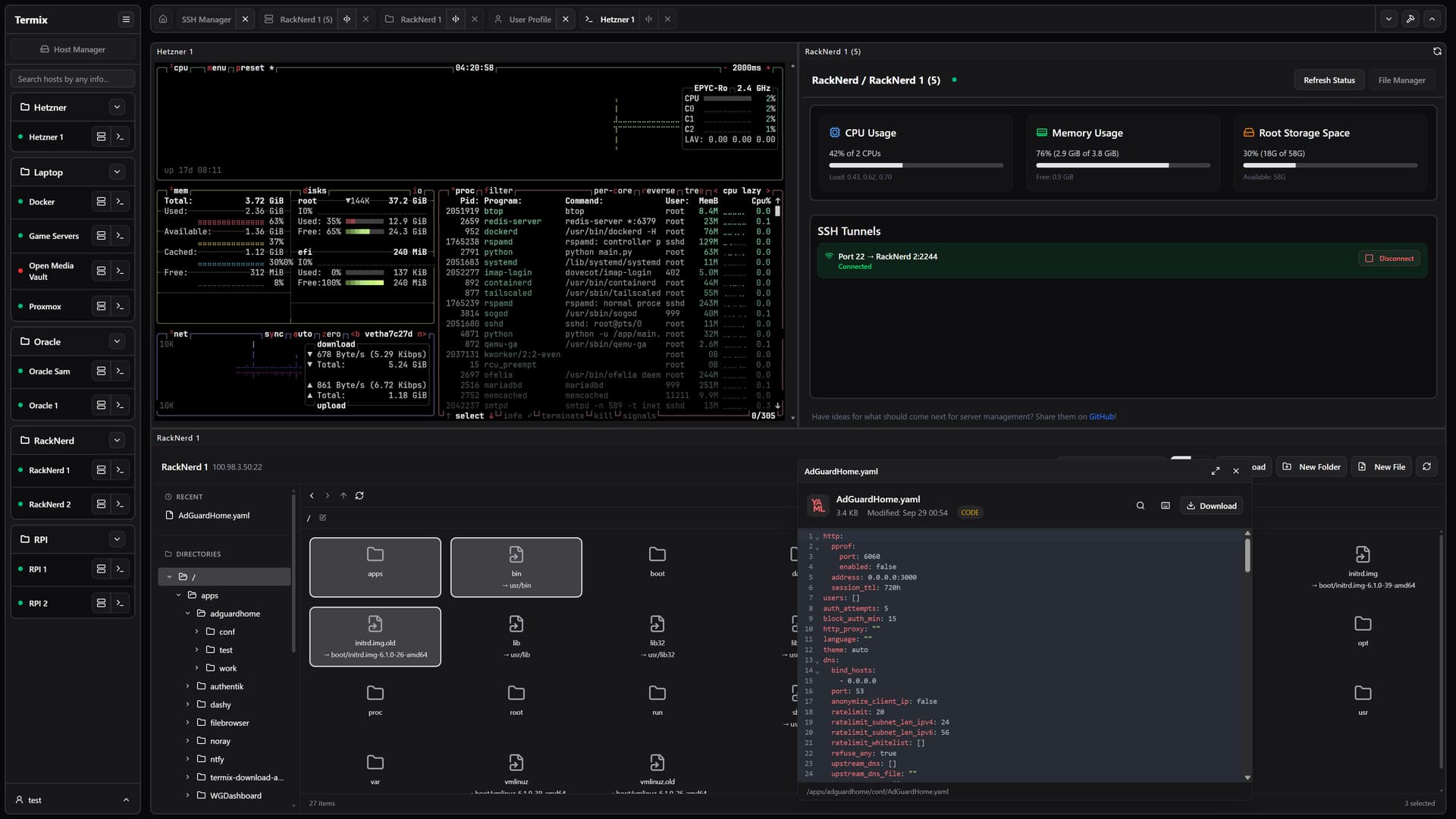
SSH Terminal Access - Full-featured terminal with split-screen support (up to 4 panels) and tab system
SSH Tunnel Management - Create and manage SSH tunnels with automatic reconnection and health monitoring
Remote File Manager - Manage files directly on remote servers with support for viewing and editing code, images, audio, and video. Upload, download, rename, delete, and move files seamlessly.
SSH Host Manager - Save, organize, and manage your SSH connections with tags and folders and easily save reusable login info while being able to automate the deploying of SSH keys
Server Stats - View CPU, memory, and HDD usage on any SSH server
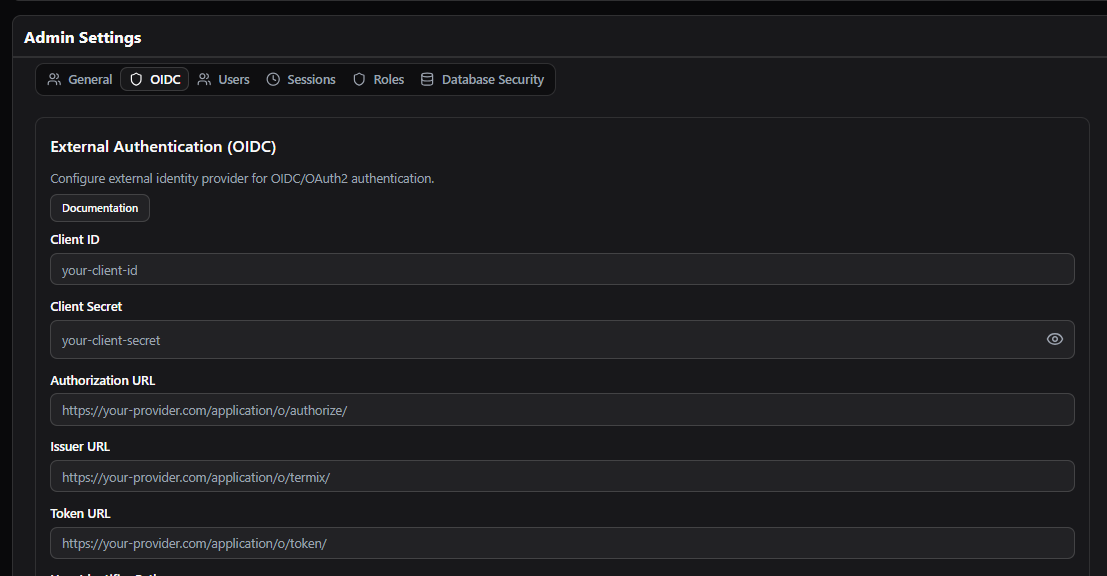
User Authentication - Secure user management with admin controls and OIDC and 2FA (TOTP) support
Database Encryption - SQLite database files encrypted at rest with automatic encryption/decryption
Data Export/Import - Export and import SSH hosts, credentials, and file manager data with incremental sync
Automatic SSL Setup - Built-in SSL certificate generation and management with HTTPS redirects
Modern UI - Clean desktop/mobile friendly interface built with React, Tailwind CSS, and Shadcn
Languages - Built-in support for English and Chinese
Platform Support - Available as a web app, desktop application (Windows & Linux), and dedicated mobile app for iOS and Android (coming in a few days)
Interesting. I can use both FQDN and external IP. However, I must use ssh port 22 whilst I have changed my ssh port according to the documentation. So ssh should only be reachable on the new port and not on the ‘old’ port 22. So using both or either external Ip and/or FQDN, I need to use ssh port 22.
If 127.0.0.1 or localhost would work with port 22, I could understand, but external IP or FQDN, I am confused as to why.
Like the documentation clearly states:
”…the preferred approach is to configure only Firewalld with a port forward (or port redirection) and leave sshd unchanged.”